By Herb Weitzman, Executive Chairman, Weitzman
This post originally ran in D CEO Magazine
In retail real estate, we talk a lot about the importance of anchors. But what does that mean?
In its strictest sense, an anchor is a large, well-known retailer that occupies a major portion of space in a center and serves as the primary draw for customer traffic.
In recent years, the definition has grown to include clusters of tenants, particularly restaurants, which serve as a center’s primary traffic draws. A well-known developer, in fact, once told me he’d rather have a lineup of high-performing restaurants rather than a traditional anchor.
But traditional anchors still serve a vital role. Not only do they attract shoppers, but they benefit the smaller tenants in a center, who capitalize on customers’ cross-shopping. And by doing so, anchors increase property values and make centers more attractive to other tenants, thereby boosting overall occupancy.
ANCHORS AND SHOPPER TRAFFIC
To illustrate the effect of anchors on a centers’ traffic, we looked at three centers that gained new anchors in recent months. The anchors include an off-price apparel retailer, a popular large-format fitness facility and a regional discount grocer.
THE OFF-PRICE APPAREL ANCHOR
In Garland, Buckingham Plaza is a 93,000-square-foot retail center with two anchor spaces. When 99 Cents Only failed nationwide a few years back, it left a 22,000-square-foot anchor vacancy at the popular center.
Last year, we backfilled the vacancy with a new store for Ross Dress for Less, the nation’s most popular off-price apparel retailer. Ross joined another discounter anchor, dd’s Discounts, as well as a lineup of small tenants for quick-service dining, services, beauty and wellness and other uses.
To show the effect of the new Ross store on shopper traffic, we turned to Placer.ai, a location‑intelligence and foot‑traffic analytics platform that uses anonymized mobile device data to show how people move through and interact with physical places.
Shopper traffic at Buckingham Plaza in the first quarter of 2025 was a healthy 122,000. But after the Ross store opened, traffic jumped to nearly 200,000 for the first quarter of 2026.
THE FITNESS ANCHOR
Addison Town Center is a 186,275-square-foot power center anchored by Target, Kroger Signature, Ross Dress for Less and PetSmart. With that lineup of anchors, the center already serves as the biggest retail traffic draw along Addison’s Belt Line Road retail corridor.
But the center had a key 37,300-square-foot anchor vacancy, which we backfilled with popular fitness chain EoS Fitness.
The gym opened in late March 2025, so we did a comparison of traffic for the first quarter of 2025 to the first quarter of 2026 to determine what effect the new anchor had – if any – on the center’s already strong shopper traffic.
The effect is noticeable. During the first quarter 2025, Addison Town Center attracted about 825,000 shoppers. By the same period a year later, that total grew to more than 1.1 million!
THE GROCERY STORE ANCHOR
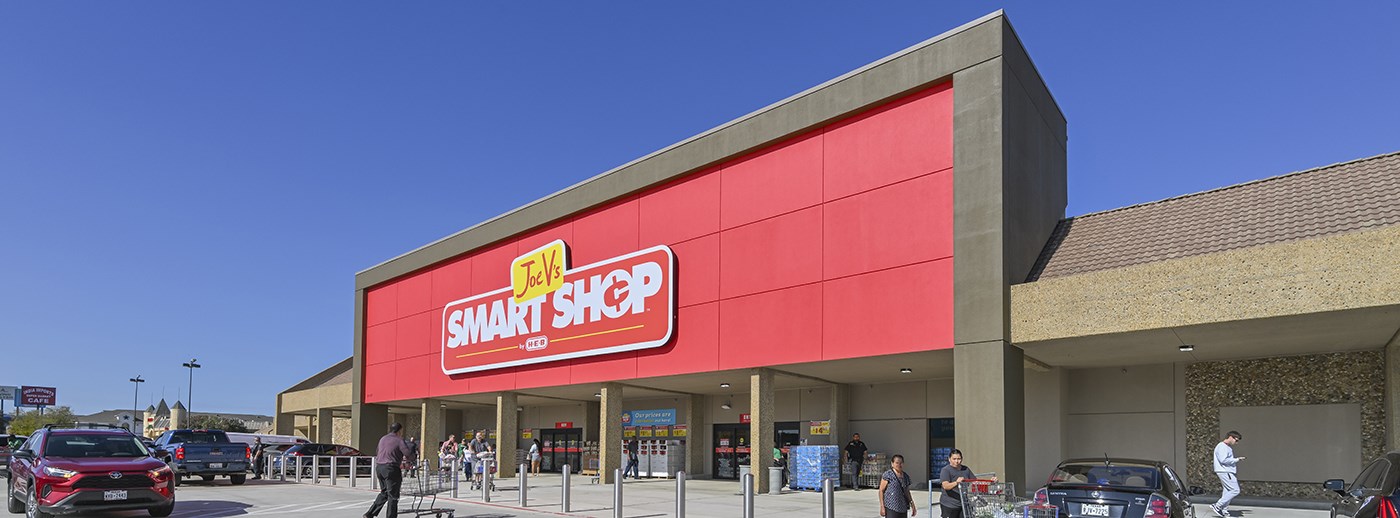
Metroplex Plaza is a 105,000-square-foot center located along W. Airport Freeway in Irving. The center in recent years lost it long-time anchor, 24 Hour Fitness. The Weitzman team backfilled the 62,000-square-foot vacancy with one of the first DFW area locations of Joe V’s Smart Shop, the discount grocery brand from mega-popular grocer H-E-B.
And based on shopper traffic, Joe V’s is also extremely popular.
During the first quarter of 2025, shopper traffic at Metroplex Plaza and its lineup of anchor-less small tenants totaled less than 90,000.
In the first quarter of 2026, with the new Joe V’s anchor in place, traffic jumped to nearly 600,000!
In all these above-mentioned centers, and in centers throughout our market, the presence of anchors benefits traffic, cross-shopping and sales. The traffic drw of anchors is so powerful that even so-called “shadow anchors” - traffic‑driving stores located near a shopping center but not actually part of the center – have a positive effect on cross-shopping and tenant sales in the entire area.